 Jems
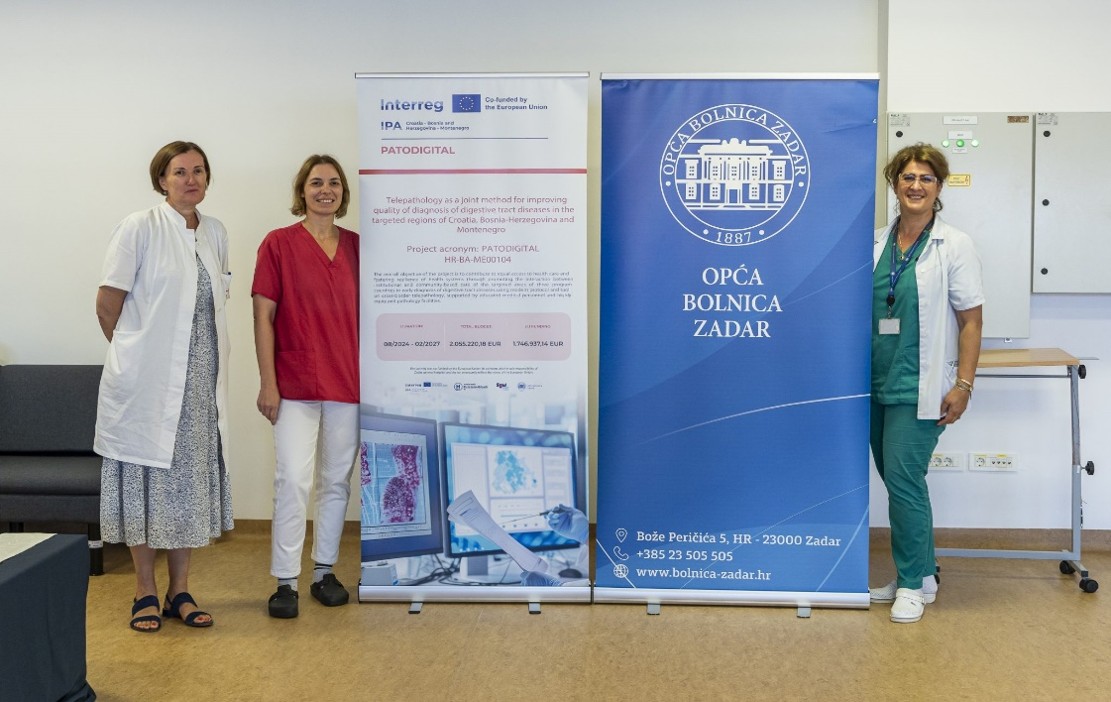
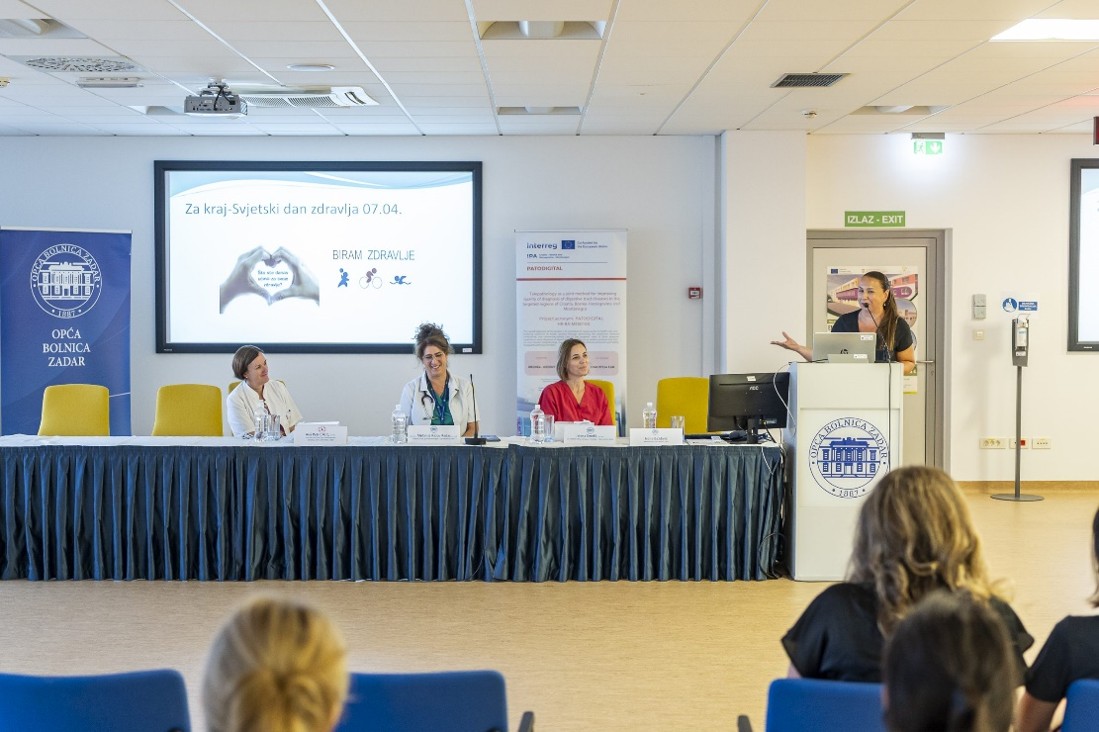
Our PATODIGITAL project continues to improve diagnostic capacities at Zadar General Hospital while raising public awareness of the importance of early detection of digestive tract diseases. As part of its awareness-raising activities, two educational workshops were held in Zadar, targeting primary healthcare professionals and representatives of the local community, associations and interested residents. The activities also included a television programme to bring the project’s key messages to a wider audience.
During the workshops, participants learned about the patient’s diagnostic pathway, from enrolment in the National Colorectal Cancer Screening Programme and gastroenterological examinations to histopathological analysis and the use of digital pathology and telepathology in modern diagnostics.
The sessions were delivered by Ana Petrić Ažić, MD, Associate Professor Melanija Ražov Radas, MD, PhD, and Jelena Smolić, MD, a specialist in anatomical pathology. The presentations received a positive response from participants, with local residents highlighting the value of such educational activities and expressing interest in further workshops.
Beyond public awareness-raising, PATODIGITAL is strengthening the diagnostic capacities of the Department of Pathology and Cytology at Zadar General Hospital. The project has supported the acquisition of modern digital pathology equipment, enabling pathology slides to be digitised, expert opinions to be exchanged more efficiently and complex cases to be assessed through improved diagnostic collaboration.
A particular focus is the development of telepathology, which enables pathologists to consult and collaborate regardless of geographical distance. The project also includes professional training and the development of joint diagnostic protocols, strengthening cooperation among healthcare professionals and supporting more efficient diagnostic processes.
Through investments in technology, professional development and public awareness, PATODIGITAL demonstrates how digital solutions can support healthcare professionals, improve diagnostic collaboration and contribute to better patient care. The project also highlights the importance of preventive programmes and timely diagnosis, showing how modern technologies complement medical expertise for the benefit of patients.