
 Jems
Jems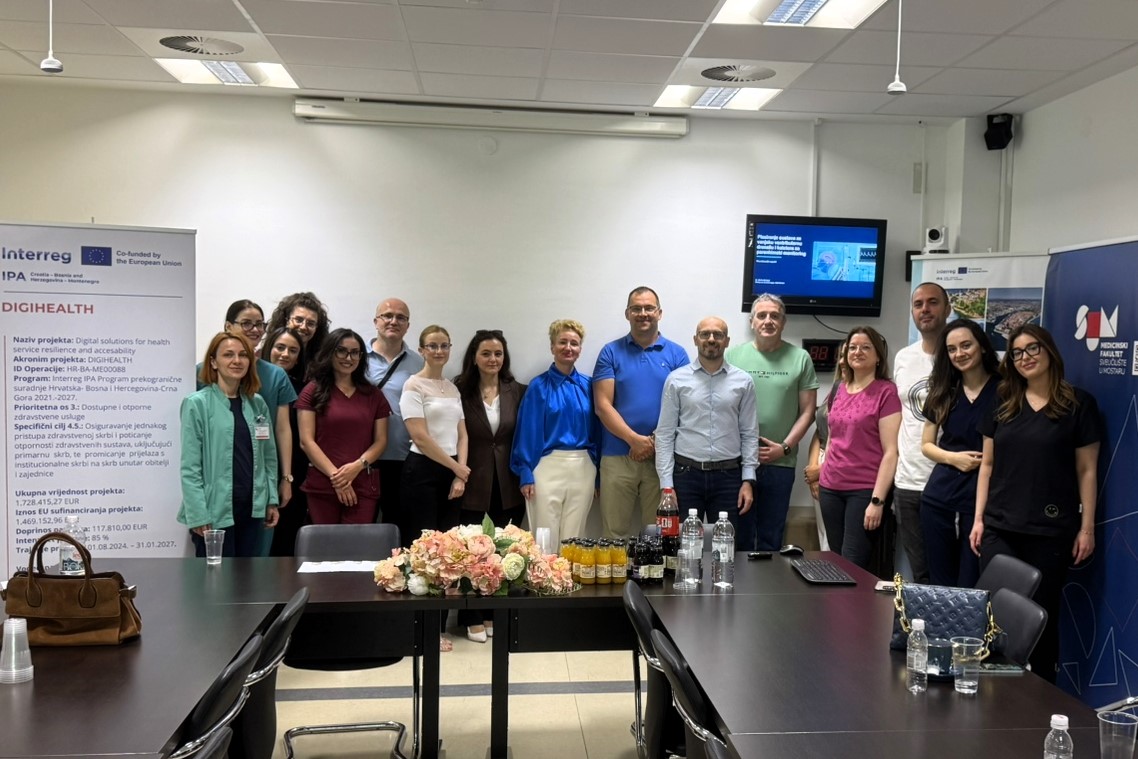
Within the framework of the EU-funded project DIGIHEALTH, the Faculty of Medicine at the University of Mostar, in cooperation with the University Clinical Hospital (SKB) Mostar, successfully hosted a comprehensive five-day professional training from May 25 to 29, 2026.
The event gathered healthcare professionals from partner institutions across Croatia, Bosnia and Herzegovina, and Montenegro to standardize professional training, exchange knowledge, and strengthen capacities for modern, digitally supported healthcare solutions. The intensive five-day program was perfectly split to give equal weight to two critical fields of modern medicine.
The program combined theoretical lectures and practical clinical work across two main areas:
- Advanced Monitoring (May 25–27):
The first half of the training focused on advanced hemodynamic and neuromonitoring in intensive care units (ICU). Led by regional experts, the sessions covered critical patient assessment in states of shock, septic shock, and traumatic brain injury. Participants explored modern diagnostic protocols, digital integration of tracking systems, and predictive models for patient recovery. The theoretical part was paired with practical clinical work with patients at the SKB Mostar ICU, focusing on enhancing patient safety and ICU resilience.
- Cryoablation Procedures (May 27–29):
The second half was dedicated to cryoablation—an innovative, minimally invasive tumor treatment being introduced to regional hospitals. Led by specialized radiologists, the sessions covered the prevention, diagnosis, and treatment of lung and breast tumors. Participants studied the technical characteristics of the device, its mechanisms of action, and patient selection protocols. This section concluded with hands-on clinical work at the Department of Radiology, SKB Mostar, bridging theory with practical application.
The expert discussions yielded crucial conclusions for both fields. For monitoring, partners reviewed milestones for a new mobile app designed to guide patient recovery after ICU discharge. For cryoablation, experts highlighted changing lung cancer demographics—noting a rise in younger patients—and stressed that low-dose CT scans and active radiologist participation in multidisciplinary teams are vital for timely patient referral.
To maximize the regional impact of these new healthcare standards, participants agreed that centers performing cryoablation must actively inform other state healthcare institutions. All partners proposed a follow-up meeting in Mostar, Bar, or Zadar to analyze and exchange final clinical data and results. At the closing ceremony, participants were awarded certificates of completion.