
 Jems
Jems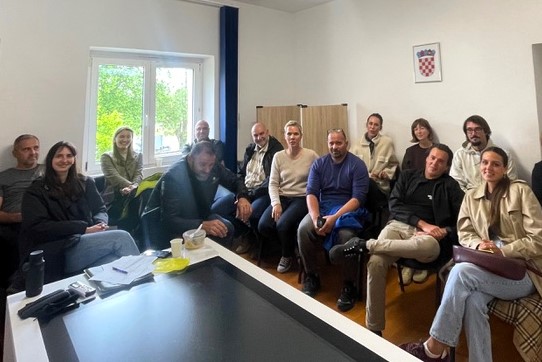
At a time when an increasing number of destinations are rethinking the future direction of tourism development, Šibenik-Knin County confirms its active and strategic role in shaping new development models that view tourism as a tool for restoring places, strengthening local communities, and creating long-term value.
With this objective in mind, all three rounds of educational workshops entitled “Regenerative Approaches to the Development of Rural Tourism” were successfully held as part of the international project SUSTOUR – Sustainable Tourism for Local Development. The completion of these workshops marked the conclusion of an educational cycle dedicated to the development of an authentic and sustainable tourism offer in rural areas.
The SUSTOUR project started on 15 September 2024 and will run until 14 March 2027. The total value of the project amounts to EUR 1,908,830.30, of which EUR 1,622,505.75, or 85%, is co-financed by the European Union through the Interreg VI-A IPA Croatia – Bosnia and Herzegovina – Montenegro Programme 2021–2027.
The Lead Partner of the project is the City of Drniš, while the project partners are Šibenik-Knin County, the Tourism Organization of Herceg Novi, and the Ministry of Education, Science, Culture and Sport of West Herzegovina Canton.
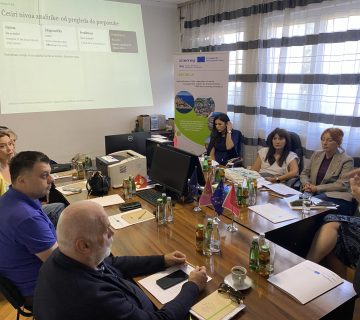
During the three rounds of workshops, held at the Drniš Feel & Taste Centre in Pakovo Selo, the programme brought together representatives of family farms, wineries, tasting rooms, restaurants, travel agencies, tourist guides, holiday home owners, creative entrepreneurs, representatives of tourist boards, associations and development institutions, as well as partners and stakeholders of the SUSTOUR project.
More than 60 participants, both in person and online, developed their own ideas through interactive work, group discussions and the exchange of experiences, while exploring new ways of connecting local production, gastronomy, natural and cultural heritage into authentic tourism products.
The workshops were led by Dr. Irena Ateljević, an internationally recognised expert in the field of regenerative tourism.
The central message of the workshops was clear: it is no longer enough merely to reduce the negative impacts of tourism — it is necessary to actively regenerate nature, communities and local economies.
Together, the participants reflected on:
- what we actually want to sustain,
- how tourism can bring life back to places,
- how to build authentic, locally rooted stories that create long-term value,
- how to connect “blue” and “green” tourism,
- how to create a year-round offer that benefits the local population.
Particular emphasis was placed on short supply chains, local gastronomy, and cooperation between agriculture, hospitality and tourism.
In addition to the theoretical part, the workshops also presented a number of concrete examples of good practice from Croatia and abroad.
Guest lecturers added special value to the programme by sharing their own experiences and demonstrating how regenerative approaches can work in practice and serve as the foundation of a successful business model.
One of the guest speakers, Hrvoje Bota, presented the development of a regenerative farm and the possibilities of connecting organic food production with tourism, hospitality and gastronomic experiences.
It was particularly valuable that he also demonstrated how a successful economic model can be developed by linking organic food production and regenerative tourism — from supplying restaurants and sailors with local ingredients to organising gastronomic tours and farm visits.
The workshops were held at the newly opened Drniš Feel & Taste Centre, which is already actively contributing to raising awareness of the potential of rural tourism in the hinterland of Šibenik-Knin County. Such a venue, located in the heart of the hinterland, further deepened the experience and connection with the topics discussed.
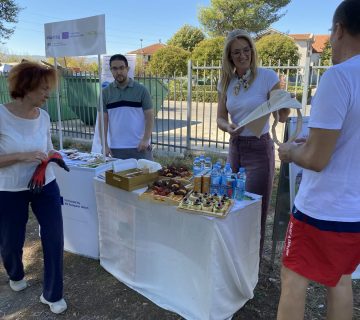
Additional value to the overall experience was provided by local gastronomy prepared from domestic ingredients, allowing participants to directly experience the connection between food, place and identity.
One of the most important results of the workshops was the creation of a strong network of people who share a common vision of tourism that respects the place, strengthens the local economy and contributes to the quality of life of residents.
Through the three rounds of educational activities, space was created for new ideas, cooperation and concrete initiatives with the potential to shape the long-term development of tourism in Šibenik-Knin County and the wider cross-border area.
The conclusion of this workshop cycle confirmed that the regenerative approach is not merely a theoretical concept, but a practical framework for developing tourism that creates added value for people and places.