
 Jems
Jems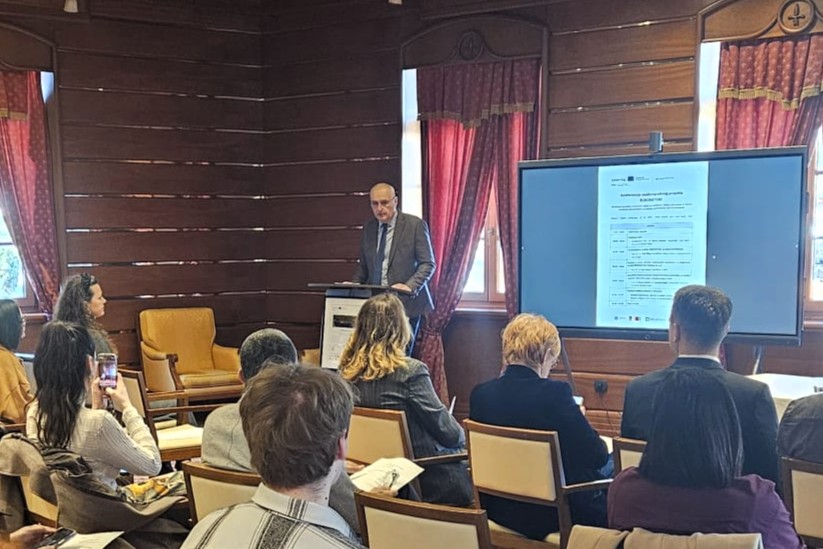
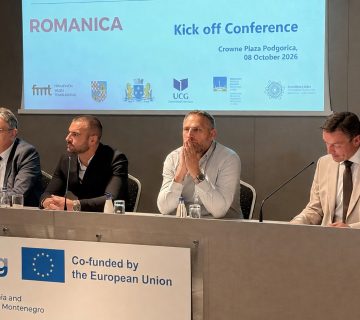
Kotor, 25 February 2026 – A stakeholder meeting of the international cross-border project ROBONETCBC was held in Kotor. The event focused on strengthening environmental monitoring and pollution prevention through modern solutions in robotics and sensor technologies. The project brings together partners from Croatia, Bosnia and Herzegovina, and Montenegro under the Interreg VI-A IPA programme Croatia – Bosnia and Herzegovina – Montenegro.
The conference was opened by Vice-Dean Assoc. Prof. Zorica Đurović, PhD from the University of Montenegro – Faculty of Maritime Studies Kotor, who emphasized the importance of scientific and professional cooperation and the application of innovation in protecting particularly sensitive coastal areas, highlighting the Bay of Kotor as an area where reliable data are a prerequisite for effective protection measures.
In the keynote presentation, project coordinator Prof. Ante Šiljeg, PhD, from the University of Zadar presented the ROBONETCBC concept and its intervention logic: the establishment of an innovation network connecting institutions, technologies, and data users (public administrations, ports, inspectorates, academia, and industry), with the aim of integrating robotics and sensor-based solutions as standard tools for the timely identification of risks and evidence-based decision-making.
Assoc. Prof. Ivan Marić, PhD, from the University of Zadar presented the main findings of the Report on the Status of Marine and Freshwater Ecosystems in Three Countries. The presentation outlined the methodologies used for data collection and comparative analysis, highlighted key pressures affecting these ecosystems, and emphasized the importance of ensuring continuous, interoperable, and technically harmonized monitoring systems to enable the timely detection of trends and environmental incidents.
The central part of the conference featured a presentation by the Faculty of Maritime Studies Kotor. Prof. Danilo Nikolić, PhD and Radmila Gagić, MSc from the University of Montenegro – Faculty of Maritime Studies Kotor presented innovative approaches for monitoring the impact of maritime traffic on air quality and underwater noise in the Bay of Kotor. They stressed that combining robotics, modern sensors, and advanced data-processing solutions enables more accurate and continuous tracking of maritime traffic impacts, as well as a better understanding of the spatial and temporal patterns of pollution.
Institutional monitoring practice was presented by Gordana Đukanović from the Environmental Protection Agency of Montenegro. In her presentation on air quality monitoring in Montenegro, she outlined the measurement framework, the role of monitoring networks and laboratory capacities, and the importance of linking field measurements with analytical methods in order to reliably assess risks to human health and the environment.
In the second part of the professional programme, Nuša Cukrov, PhD from the Ruđer Bošković Institute, Šibenik spoke about the development and application of innovative technologies for monitoring copper concentrations in estuarine ecosystems affected by nautical traffic, demonstrating how targeted monitoring of specific parameters can support early identification of pressure sources and assessment of ecological impacts.
Danijela Joksimović, PhD from the University of Montenegro – Institute of Marine Biology presented the topic of eutrophication monitoring: status, trends, and challenges, highlighting indicators that signal changes in the productivity of water bodies, the drivers behind these changes, and the need for integrated observation of physico-chemical and biological parameters.
In a related presentation, Slavica Petović, PhD from the University of Montenegro – Institute of Marine Biology discussed methods for assessing the structure and diversity of benthic communities in marine ecosystems, emphasizing the value of benthos as a “living indicator” of long-term changes and cumulative impacts, as well as the importance of standardized sampling and interpretation methods.
The conference further broadened its perspective through examples of initiatives in the blue economy. Sandra Perić from the Chamber of Commerce of Montenegro presented the topic of creative crafts for industrial symbiosis supported by AI tools, highlighting how digital solutions can facilitate stakeholder connectivity and enhance resource efficiency in blue sectors.
Mirko Đurović, PhD, from the University of Montenegro – Institute of Marine Biology presented activities aimed at improving the availability of a qualified workforce in blue economy sectors across the South Adriatic region by strengthening competences and aligning education with labor market needs.
Through events such as this, ROBONETCBC reinforces cooperation among partners and local stakeholders, while the Faculty of Maritime Studies Kotor confirms its role in developing solutions for more accurate and continuous monitoring of maritime traffic impacts on the environment of the Bay of Kotor.