
 Jems
Jems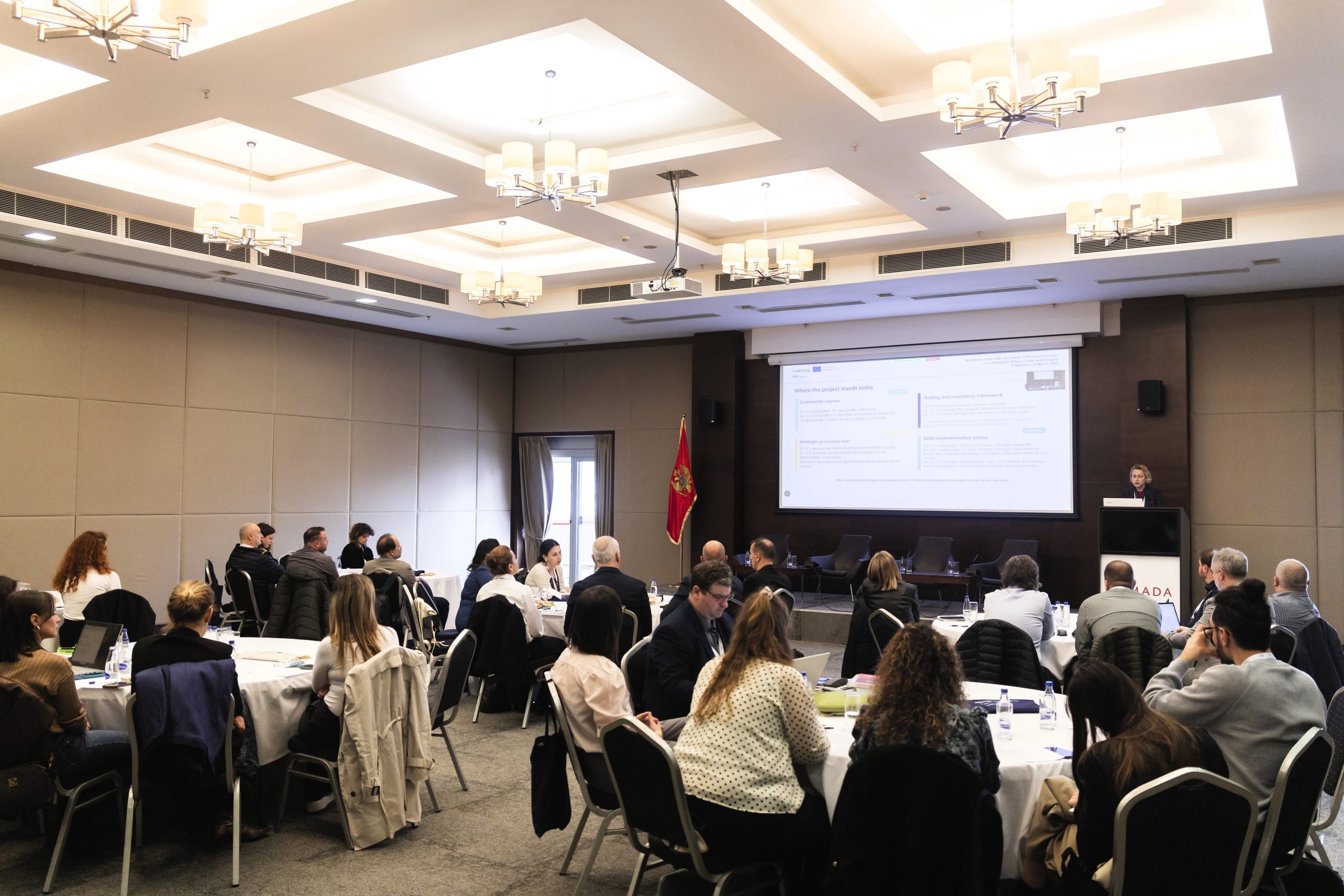
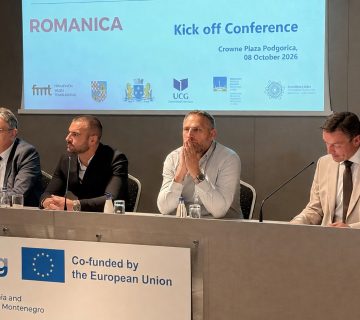
A joint workshop of the ROBONETCBC and INNOVABLUE projects was held in Podgorica under the title “From Analysis and Needs to Innovative Solutions: Co-creating the Future of Blue Technologies.” The workshop was designed to connect scientific knowledge, technological capacities, and real user needs, with the clear aim of translating existing analyses and results into concrete, practical, and applicable solutions in the field of blue technologies.
The event gathered around 50 participants from eight countries, including representatives of small and medium-sized enterprises, research and academic institutions, technology companies, innovators, and policy makers. This multi-sectoral approach created a dynamic environment for collaboration, knowledge exchange, and the joint development of solutions that can respond to the region’s concrete environmental and societal needs.
The workshop was officially opened by Katarina Lalović, Acting Director of the Innovation Fund of Montenegro. In the introductory part of the programme, Saša Ivanović, Head of the Sector for Strategic Planning and International Cooperation at the Innovation Fund of Montenegro, presented the agenda and objectives of the workshop, highlighting the importance of joint work in linking ecosystem challenges with technological responses, as well as the need for potential users to be actively involved in defining priorities and developing future solutions.
The first session was dedicated to the INNOVABLUE project. In this session, Snežana Šćepanović, Head of the Department for EU Projects, presented the project’s objectives, an overview of its activities and results to date, as well as the expectations for the workshop itself, with particular emphasis on the importance of understanding real user needs and involving them in the process of developing innovative blue technologies.
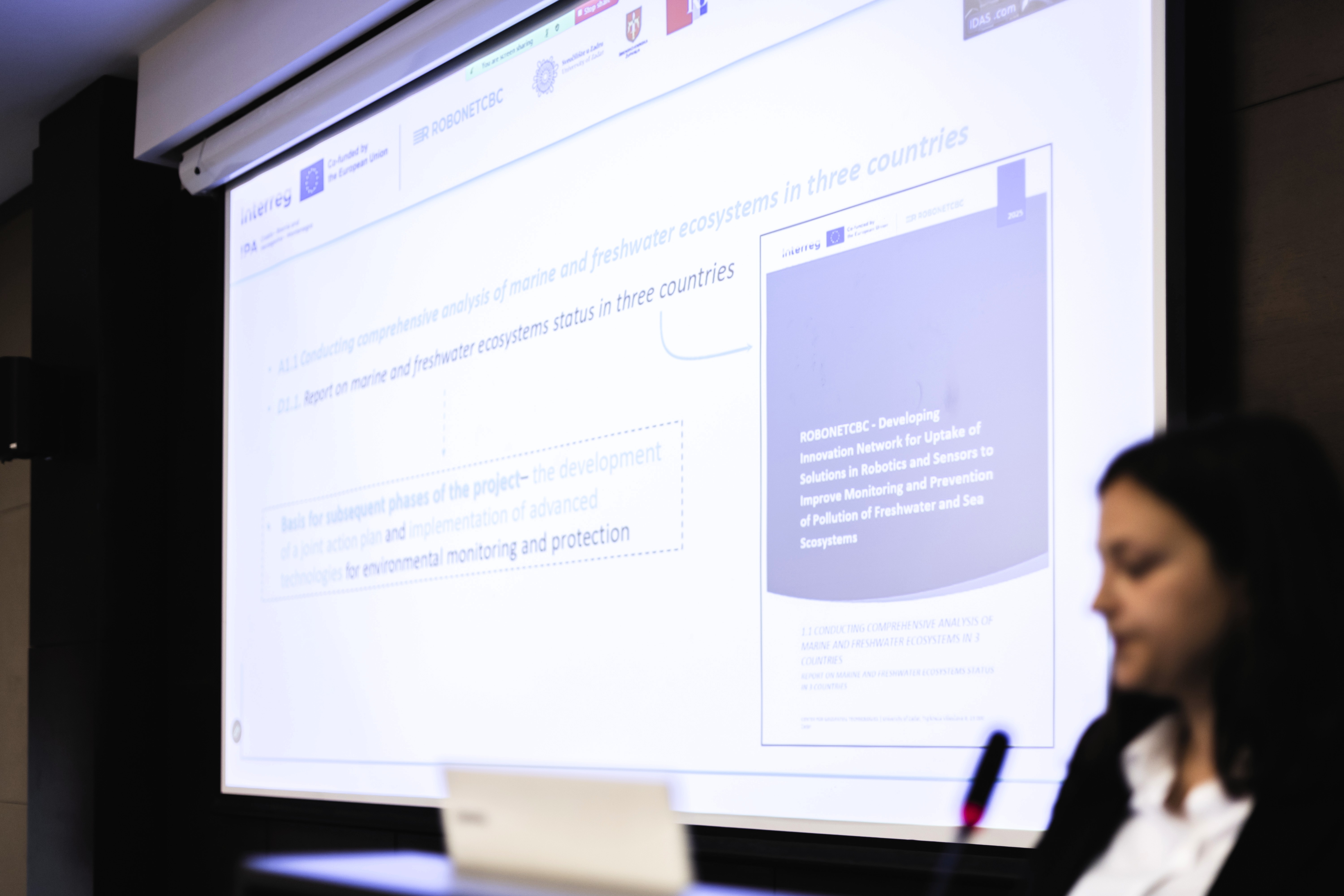
In the second session, Dora Crmarić from the Ruđer Bošković Institute presented the ROBONET project, focusing on the results related to ecosystem status and technological insights. It was particularly emphasized that ROBONET, through its key reports, provides an overview of environmental conditions, pollution, biodiversity, existing monitoring systems, as well as equipment and data exchange practices, while also identifying outdated technologies and opportunities for innovation based on input from relevant stakeholders.
The third session, Connecting Technology and Users, focused on presenting concrete use cases and successful applications of blue technologies. Željka Rajković from DIH Innovamare presented the results of the Interreg Italy–Croatia DIH InnovaMare project through video presentations of successful applications in the field of blue technologies, giving participants a clearer understanding of how innovative technological solutions can be developed and aligned with real user and market needs.
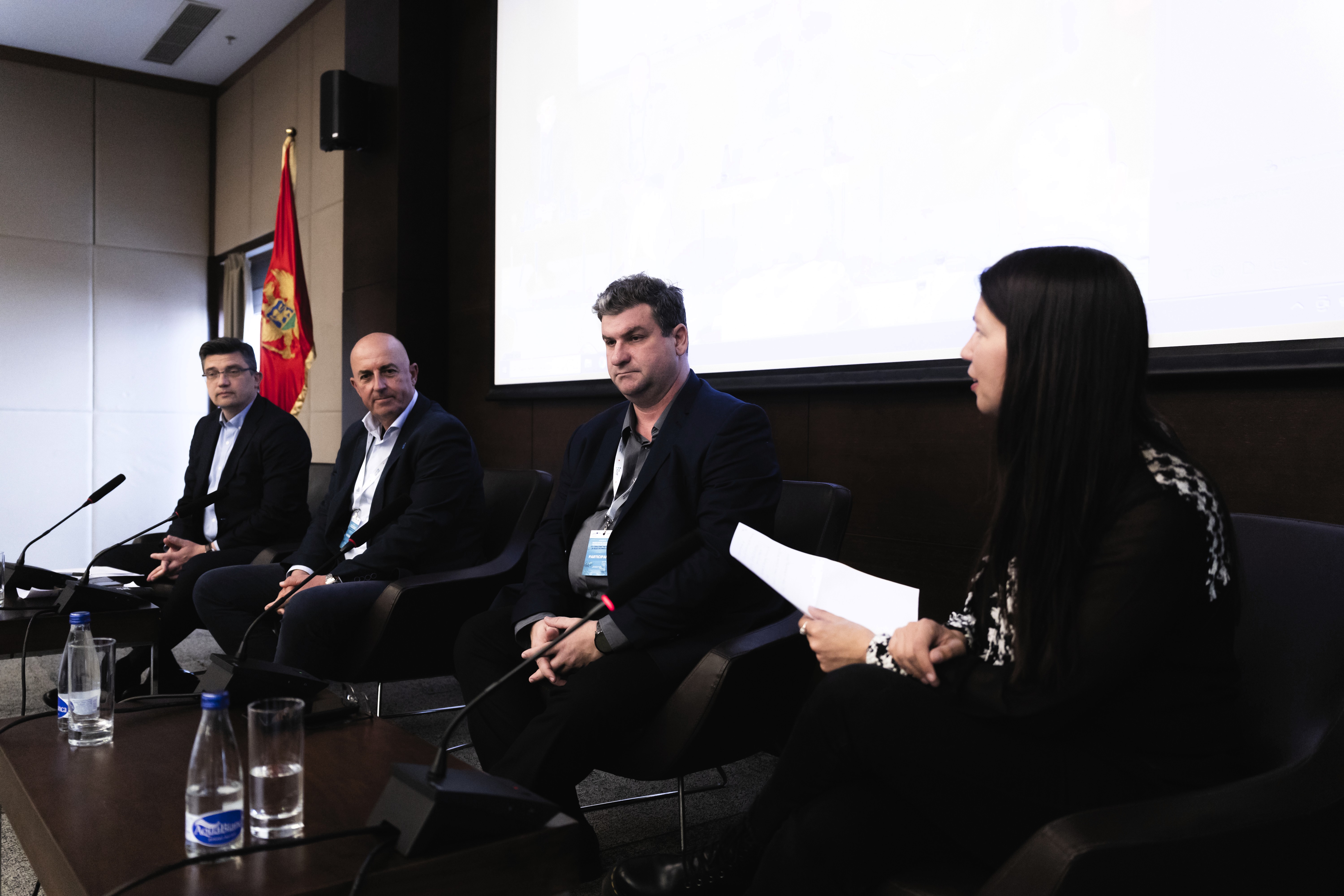
The fourth session of the workshop featured a joint panel discussion entitled “From Analysis to Innovative Solutions: Identifying Obstacles, Opportunities and Solutions,” dedicated to linking the analyses and reports of the INNOVABLUE and ROBONETCBC projects with real needs and the further development of conceptual solutions. The panel included Dr Nikola Svrkota, Director of the Centre for Ecotoxicological Research of Montenegro, Dr Aleksandar Valjarević from the Faculty of Geography, University of Belgrade, Assoc. Prof. Ivan Marić, PhD from the Department of Geography, University of Zadar, Dr Aleksandar Joksimović from the Institute of Marine Biology, University of Montenegro, and Dr Nemanja Mrđić from the Archaeological Institute in Belgrade, while the discussion was moderated by Nuša Cukrov from the Ruđer Bošković Institute. Through an exchange of experience and different expert perspectives, the panelists addressed issues related to monitoring, ecosystem protection, technological readiness, barriers to the application of innovation, and the possibilities for translating the results of existing analyses into concrete next steps and pilot solutions.
The fifth session was a practical and interactive workshop in which participants were divided into thematic groups, with each group working on one or two priority locations or thematic challenge areas, with the goal of jointly developing initial conceptual solutions (PoC). The session was moderated by Domagoj Šarić from the Croatian Chamber of Economy and Ivana Kostić from the Innovation Center of the Faculty of Mechanical Engineering in Belgrade.
Group work was organized around three key challenges: AI-Powered Blue Data Spaces, Living Water Observatory, and Smart Underwater & Remote Operations. Participants jointly explored how fragmented marine and maritime data can be integrated into forecasting and decision-support tools, how real-time water data can be transformed into actionable insights for monitoring and timely response, and how to develop safer, more efficient, and scalable solutions for underwater monitoring, inspection, and intervention. Through guided group work and expert facilitation, initial conceptual solutions were developed in all three areas, with strong potential for further development and testing in real-world conditions.
The final session was dedicated to presenting the results of the thematic groups and providing a concluding reflection on the event. A final overview of the importance of the workshop, its results, and the cooperation between the Interreg projects INNOVABLUE and ROBONET was given by Snežana Šćepanović, Head of the Department for EU Projects at the Innovation Fund of Montenegro.
The workshop confirmed that the region has both the knowledge and the interest needed to develop modern solutions in the field of blue technologies, but also that their success requires stronger links between institutions, researchers, companies, and end users. Through its continued activities in international cooperation, the Innovation Fund of Montenegro will continue to encourage the development of innovative, relevant, and applicable solutions to the challenges facing marine and freshwater ecosystems, which form the basis for sustainable development, strengthened environmental resilience, and the wider application of innovative blue technologies in the region.